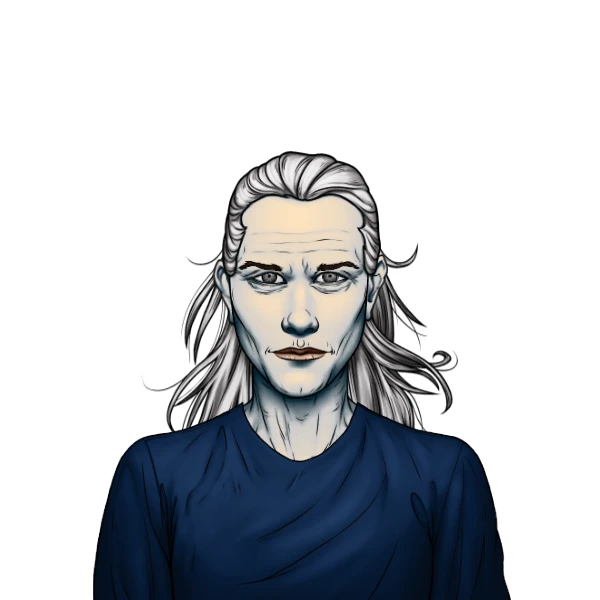
Description
Seylon Vane was a distinguished wizard of middle years with sharp, intelligent features and the bearing of a respected scholar. In life, he dressed in formal academic robes and carried himself with the quiet intensity of someone consumed by intellectual pursuit.
Personality
Seylon was once brilliant, curious, and widely admired for his magical innovations, but his daughter Lyra's sudden death transformed him into an obsessed recluse. His grief became so all-consuming that he withdrew from the world entirely, shutting himself away in secret research no one was permitted to see.
Background
Seylon Vane was a professor at Hogwarts in the early 1600s, renowned not only for his teaching but also as a master craftsman of magical items. His enchanted artifacts were sought after throughout the wizarding world, though he kept his most powerful and dangerous creations hidden from public knowledge, fearing they were too perilous to release.
After Seylon's death, the Hogwarts faculty of the era deliberately scrubbed his name from official records, wanting to bury the scandal of a professor conducting forbidden research beneath the school. Over the centuries, the suppression worked almost too well — today, Seylon Vane is a footnote in obscure histories, and many of the facts about him are disputed. Most current professors know the tower exists beneath The Restricted Section, but consider it little more than an ancient ruin and magical curiosity. Few believe the stories about his legendary relics, and no one is actively maintaining the cover-up — it simply became irrelevant long ago.
Story
Though Seylon Vane died four centuries ago, his legacy haunts Caoimhe Keelan, Finlay Figgins, and Otto Noxley's experience at Hogwarts. They discovered Seylon's Tower hidden beneath The Restricted Section — and unlike the adults who see only crumbling ruins, the children see the tower as it truly is.
Inside, they found Seylon's journal fragments describing experiments with magically created mini-dragons, alchemy puzzles he designed, and memory pools containing echoes of his work. The tower's challenges (lightning chambers, spectral proctors, and dragon hatcheries) all bear his genius and obsession.